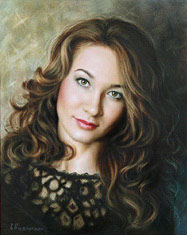
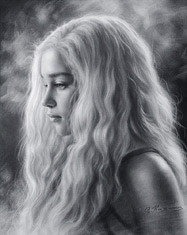
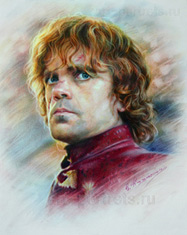


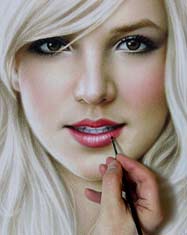
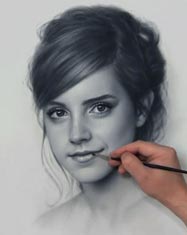
Dry brush technique, a modern style of oil painting on paper, quite similar to drawing portraits in pencil.
If you are interested in the materials, click here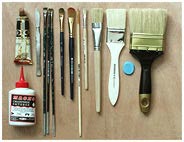
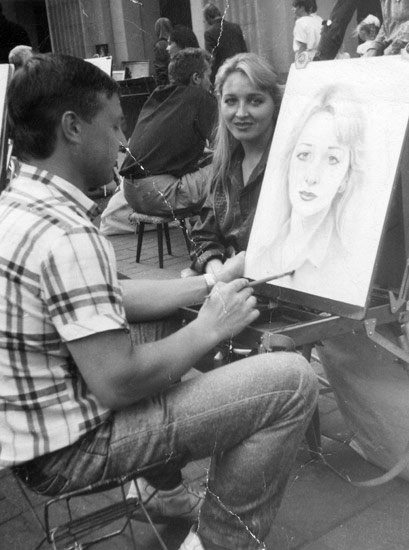
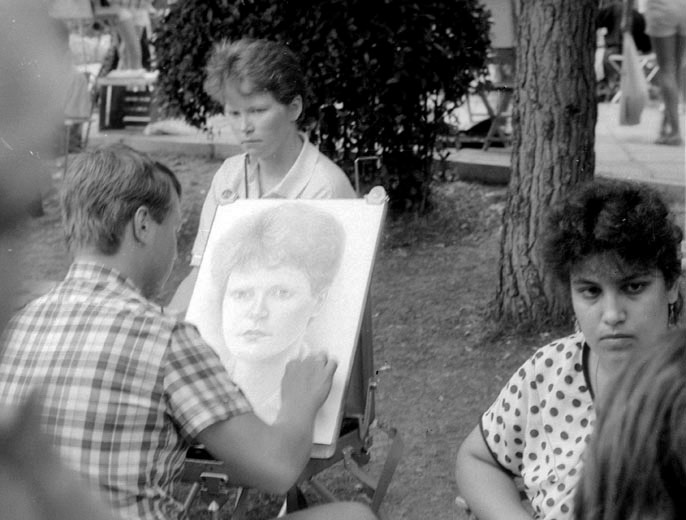
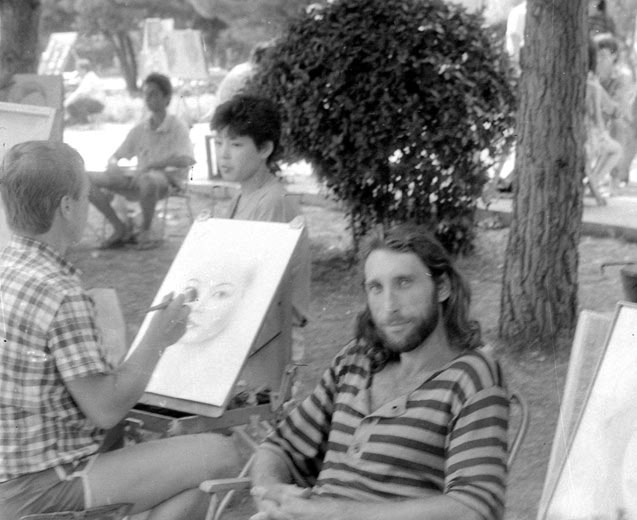
Dry brush technique is a modern style of painting in which oil paint, bristle and synthetic brushes are used on watercolour paper or fabric. A few drops of solvent is used as well and a rubber eraser for highlights and details.
Why this drawing style so called? Black oil paint (of any kind) is squeezed from the tube onto the palette, only a little bit and if desired, 2-3 drops of domestic sewing machine lubricating oil or diesel fuel is added as solvent. Slightly touch the paint with the paintbrush and rub it on a palette so that the brush is actually almost dry.
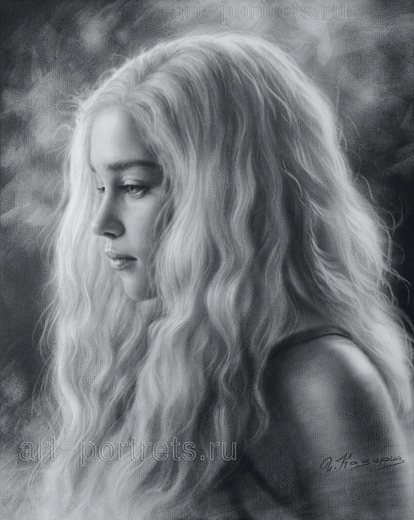
For a black and white portrait about 0.5 cubic centimeter of black oil paint is enough. Then apply a very thin layer of paint on watercolor paper or fabric. The result: the surface is not greasy when you touch it, therefore you can frame it or roll it up for transport without a frame. At first glance this kind of drawing
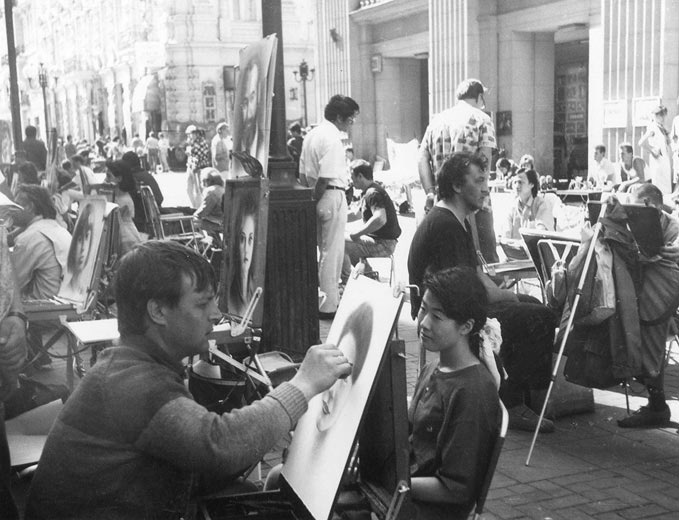
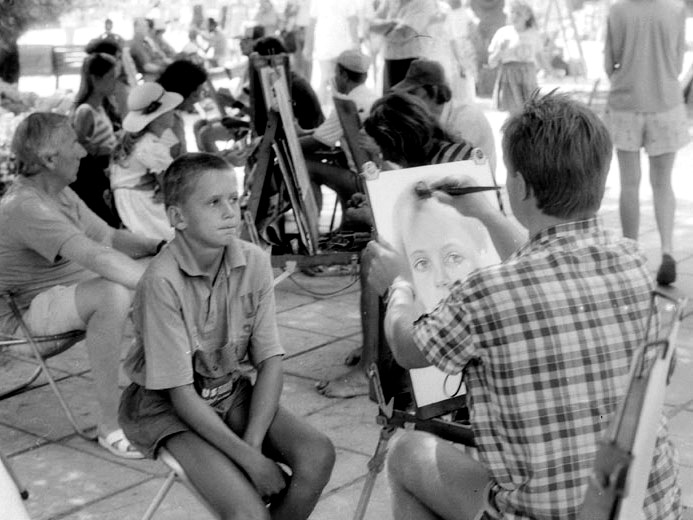
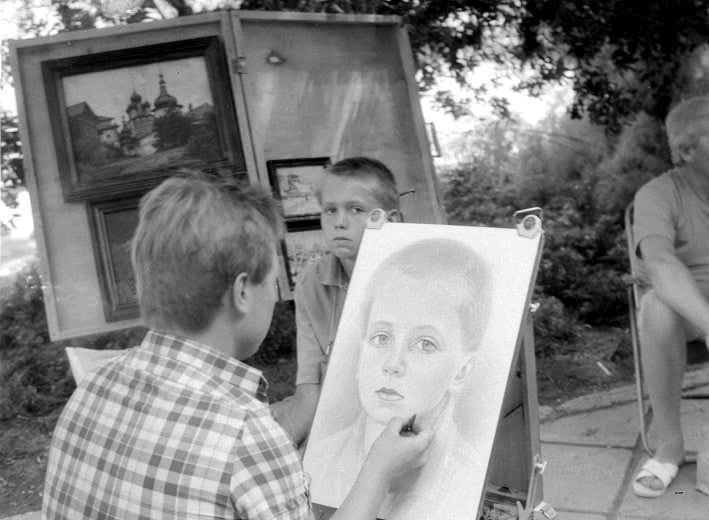
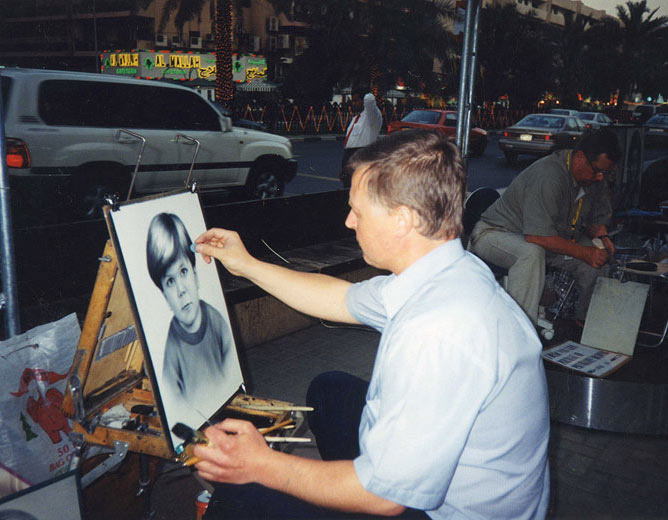
is very similar to pencil drawing. In fact, pencil is actually used: some artists depict the picture initially by drawing a pencil sketch and only then do they start using a brush with oil paint; while other artists do not use pencil at all and use this method from start to finish - like some of the artists of Moscow's Arbat street used to do.
The most important feature of this drawing style is that it allows reduces time with excellent quality, so a artist can earn much more money this way than using any other method. More information can be found here: How to earn money by drawing
This method of drawing first came into existence roughly about the mid 20th century. Soviet artists made such black and white and color portraits by rubbing brushes with paint on white cotton cloth ordinary white sheet stretched on a frame. Paper was also used but this was short-lived because of the conditions (sungliht, etc.) and the szie that made it non-practical.
The size of the portraits were often as big as three meters and therefore only canvas was practical to use - although it was expensive. They were mostly images of political figures of the Socialist era: Lenin, Stalin, Brezhnev and other important people. In the days of Leonid Brezhnev there were court painters -so called "retouchers"- whose jobs were to touch up someone's image: their imperfections, clothes /uniforms - especially the images of very important persons: members of the Politburo of the Communist Party of the USSR, who wished to appear in the portraits as immaculate - hence, more respectable.
The artists used in such works involved several techniques: dry brush, watercolor, colored pencils, tempera. In modern art this style is perceived as a non-traditional, it has mostly been used by free/street artists. Not in one art institution this method of drawing is taught. A new painting method simply can not be recognized in academic circles for various reasons, conservative views - despite the fact that we live in the 21st century now and this brilliant painting style have gained popularity.
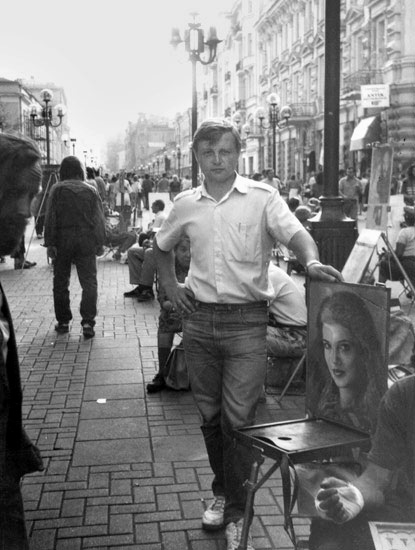
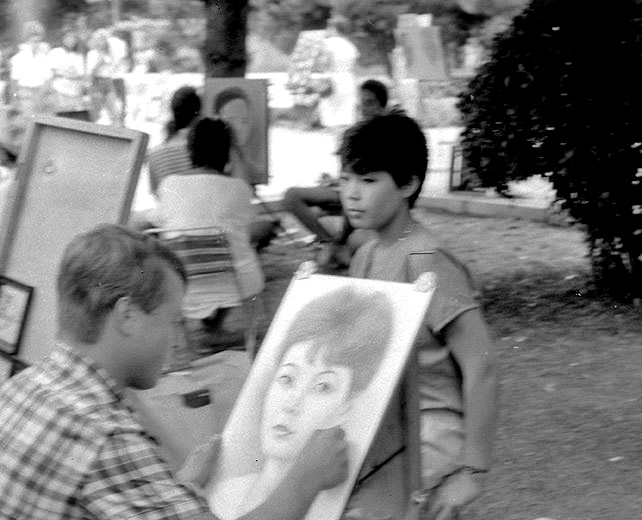
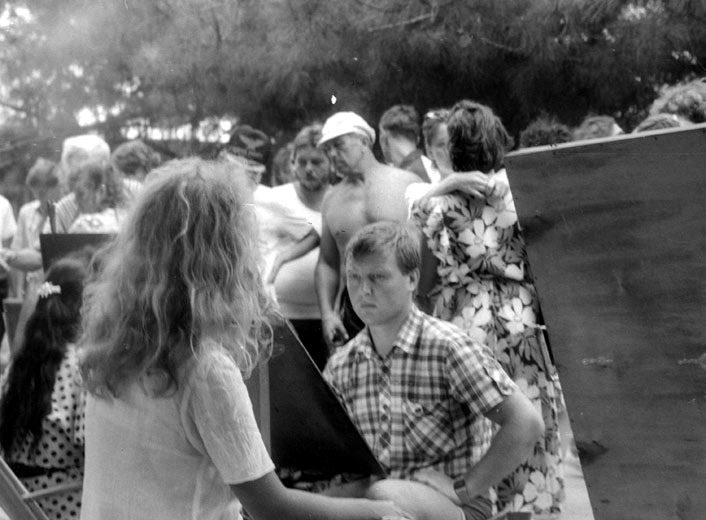
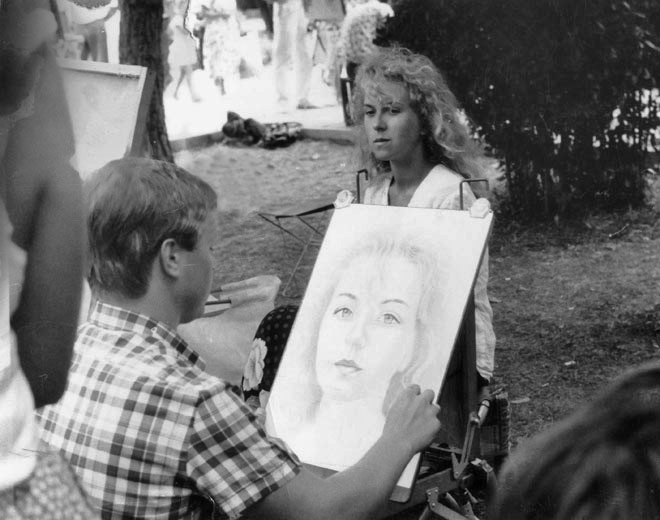
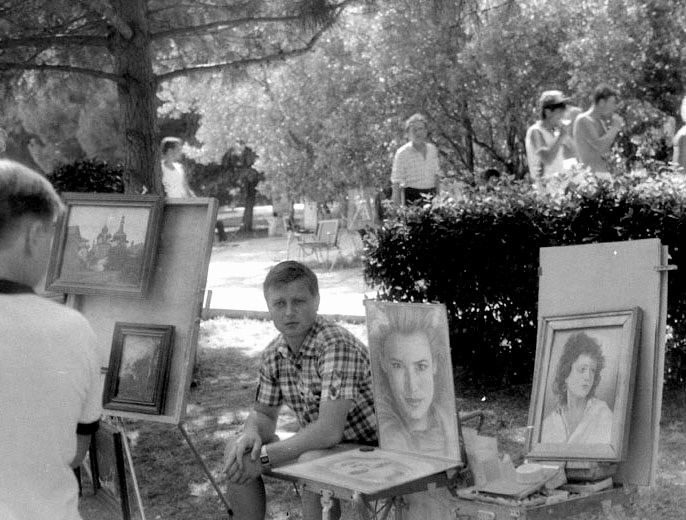
 You can find no information about this drawing in bookstores either. Therefore, many skilled artists have trained independently. .
Currently this kind of drawing is considered to be one of the most advanced.
You can find no information about this drawing in bookstores either. Therefore, many skilled artists have trained independently. .
Currently this kind of drawing is considered to be one of the most advanced.
It is the fastest way to draw a sketch from life, yet some artists from different countries do not know about it at all and so they draw using the only old method by charcoal, pencil, sanguine, pastel, etc., thus they lose more of their time - and, of course, their earnings. At present I am getting a lot of emails with various questions from many artists from different countries about this popular style of drawing on paper with oil paints
How to keep a portrait? When you need to transport a portrait without a frame, you place it between 2 sheets of thick cardboard or gently roll it to put in a tube. A sheet of paper without a frame must be handled carefully. Watercolor paper, though dense as drawing paper, easily crumples. It is not recommended to keep it in tube for a long time. A drawing or painting on any type of paper should be stored away from direct sunlight in a frame under glass, thus protecting the portrait from dust and moisture for many years.
The Dry Brush method today is recognized by many freelancers throughout the civilized world, the popularity and demand keep growing and growing every day.
I'm sorry for my english, if you find incorrect descriptions on my site and wish to correct, please message me to my portret7@gmail.com